
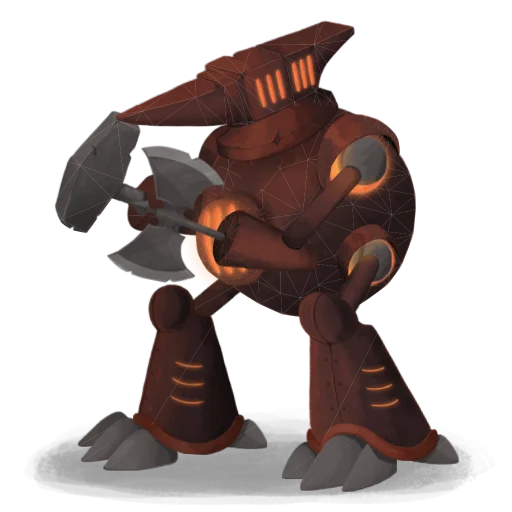
What does Axebot do in Slay the Spire 2?
Axebot is a monster enemy in Slay the Spire 2. It appears in The Glory, has 40 - 44 (42 - 46) HP context, 4 mapped moves, and shows up in 1 mapped encounter across The Glory.
In practice, the main reason to review the Axebot slay the spire 2 enemy page is that enemy knowledge changes deck decisions. If you know a fight is going to punish slow turns, you value immediate block and cheap output more highly. If you know a fight is going to scale over time, you stop pretending a cute short-term line is enough and start drafting toward a real answer. That is what this page is trying to support. It gives you the context behind the name so the next time Axebot shows up, you know what question the fight is asking.
Axebot moves and attack pattern
Move preview: Boot Up / One-Two 5 / Sharpen
Chooses randomly from One-Two, Sharpen, and Hammer Uppercut (allowed options equally likely). Cannot Sharpen twice in a row. Cannot use One-Two or Hammer Uppercut more than twice in a row.
For most players, this is the most important part of the Axebot slay the spire 2 enemy page. Exact numbers matter, but the shape of the fight matters more. If Axebot pressures setup turns, you need to front-load defense or shorten the fight. If the enemy snowballs over time, your deck must either scale faster or punish the windows before the pattern stabilizes. Learning the pattern gives you a repeatable answer instead of a guess.
Where Axebot appears
Axebot appears in The Glory. On this page, the act data is not filler. Act placement tells you how harshly to judge the enemy. A monster in Act 1 teaches something different from an elite in late-game Underdocks. Knowing where the fight belongs helps you decide whether to build for consistency, burst, endurance, or a more specific matchup answer.
The appearance note for Axebot is 1 mapped encounter across The Glory. That gives enough context to decide how often this Slay the Spire 2 enemy should actually influence your route planning. Some enemies are common enough that they should shape early picks. Others are matchup pages that mainly matter when you are studying act-end threats.
How threatening is Axebot?
Axebot is threatening because it tests more than HP totals. The enemy checks whether your deck can sequence turns cleanly, whether you can survive awkward hands, and whether your engine has enough real combat value to matter before the fight gets away from you. That is why the Axebot slay the spire 2 enemy page focuses on the pattern summary rather than pretending one line of raw damage tells the whole story.
Threat level also depends on archetype. Fast burst decks may treat Axebot as a simpler damage race, while slower scaling lists may need to solve the pattern in a more technical way. The useful habit is to ask which part of your current deck this enemy exposes. If the answer is “my setup turn,” “my weak AoE,” or “my inability to finish before scaling,” then the page has already done its job.
How to prepare for Axebot in Slay the Spire 2
The best preparation for Axebot starts before the room itself. Draft cards that solve the kind of fight this enemy represents, not only the fight you just finished. If Axebot is a tempo enemy, take cleaner early-turn tools. If Axebot is a scaling enemy, value reliable payoff and anti-snowball lines more heavily. If it is a board-control fight, make sure your deck can handle multiple targets without collapsing.
Once you are in combat, use the Axebot slay the spire 2 enemy page as a reminder to play the fight in phases. Identify the most dangerous turn, plan your block around it, and do not spend all of your premium resources too early unless the payoff is ending the fight outright. That mindset makes enemy pages useful. They are not just lore entries. They are planning tools that help turn enemy knowledge into better decisions.
Axebot Slay the Spire 2 enemy FAQ
What does the Axebot slay the spire 2 enemy page help you track?
The Axebot slay the spire 2 enemy page is meant to summarize where Axebot appears, what kind of fight it belongs to, and how its move pattern shapes combat. It is built for fast reference before hallway fights, elites, or bosses in The Glory.
How dangerous is Axebot as a Slay the Spire 2 enemy?
Axebot is dangerous when you ignore its pattern and let the fight play on its preferred timeline. The main threat is not just raw damage, but how its move cycle pressures setup turns, card sequencing, and whether your deck can handle repeated value from a monster enemy.
Where does Axebot appear in Slay the Spire 2?
Axebot appears in The Glory. On this page, the appearance summary points you to the act context and encounter role so you can judge how likely you are to face this Slay the Spire 2 enemy during a run.
How should you prepare for Axebot in Slay the Spire 2?
Prepare for Axebot by respecting the pacing of the fight. That usually means understanding the move preview, identifying the turn where the enemy becomes most threatening, and making sure your deck has enough burst, block, scaling, or debuff coverage before the fight reaches that point.